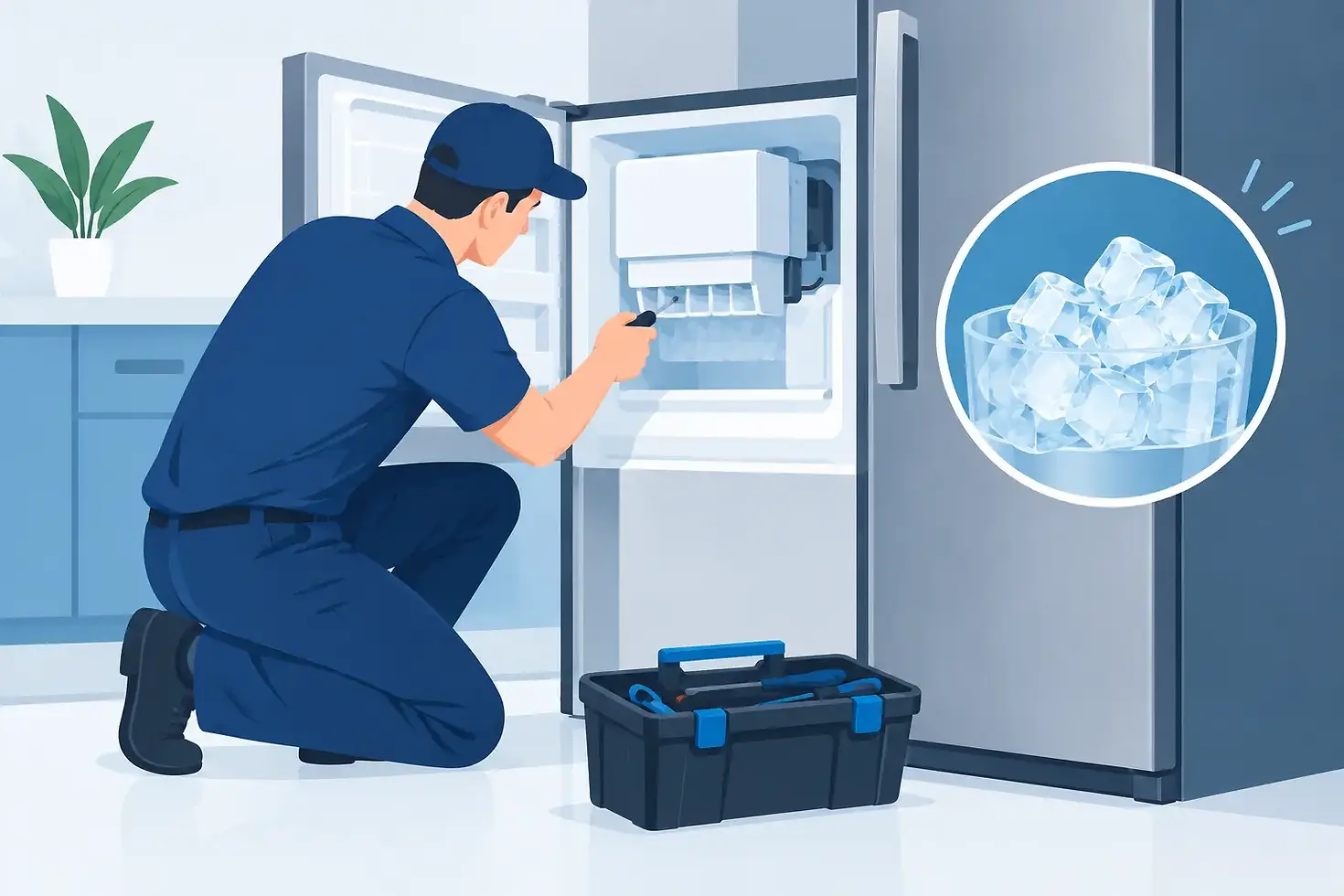
Ice Maker Repair When Your Freezer Stops Making Ice

A freezer that suddenly stops producing ice can disrupt far more than a few cold drinks. For busy Lower Mainland households, an ice maker repair issue may mean a leaking fridge, a blocked water line, a noisy freezer, or a rental unit that needs attention before tenants are affected. The good news is that many ice maker problems have clear causes, and a careful diagnosis can prevent a small fault from turning into water damage or a larger refrigerator repair.
How Ice Maker Repair Starts With the Symptoms
Ice makers do not all fail in the same way. Some stop making ice entirely. Others make small, hollow, cloudy, or misshapen cubes. You may hear the ice maker motor cycling without water entering the tray, or find that the ice bin is full but the dispenser will not release cubes.
Those details matter. A refrigerator that produces no ice but still dispenses water often has a different issue than one with no water flow at all. Likewise, an ice maker that leaks into the freezer may have a frozen fill tube, a damaged valve, or an ice maker assembly that is no longer cycling correctly.
Before arranging service, take note of when the problem began, whether the refrigerator recently lost power, and whether you changed the water filter. This gives the technician a stronger starting point and can shorten the diagnostic visit.
No Ice Production
If there is no ice at all, first check that the ice maker is switched on and the refrigerator door closes fully. Many models pause ice production when the door switch is not engaged or when the ice bin arm believes the bin is full. A freezer set too warm can also stop or slow production. Most ice makers need the freezer to remain at approximately -18 C to operate reliably.
If the unit is on, the bin is empty, and the freezer is cold enough, the likely causes include a clogged water filter, a frozen fill tube, a failed inlet valve, a faulty ice maker control, or a damaged door switch. These are not all do-it-yourself fixes, especially where water and electrical components meet.
Small, Cloudy, or Hollow Cubes
Odd-looking ice often points to restricted water flow. A partially blocked filter, low household water pressure, a kinked supply line, or a valve that is not opening fully can leave the ice tray underfilled. The cubes may be thin, hollow in the middle, or much smaller than normal.
Cloudy ice is not always a repair problem. Minerals and air trapped in the water can affect appearance, particularly when water sits in the tray longer than usual. However, a sudden change in cube size or production speed deserves attention, because it can be an early sign that the water supply system is struggling.
Ice Maker Leaks or Freezes Over
Water pooling beneath the crisper drawers, sheets of ice on the freezer floor, or frost around the ice maker should be addressed promptly. A frozen fill tube may cause water to spray or overflow. In other cases, the water inlet valve may not shut off properly, allowing too much water into the tray.
Do not chip away at heavy ice with knives, screwdrivers, or sharp tools. It is easy to puncture a liner, damage a water line, or injure yourself in a tight freezer compartment. Turn the ice maker off, protect nearby food, and arrange professional help if the leak or ice buildup returns after a basic thaw.
Safe Checks Before Booking Ice Maker Repair
There are a few sensible checks a homeowner, tenant, landlord, or property manager can make without taking apart the refrigerator. Confirm that the water supply valve behind or below the fridge is fully open. Look for an obvious kink in the water line, but avoid pulling the appliance forward aggressively, as supply lines can crack or disconnect.
If your refrigerator has a water filter, check whether it is overdue for replacement. A filter past its recommended service interval can restrict flow, affect taste, and reduce ice production. Install only the correct compatible filter and follow the refrigerator manufacturer's reset instructions if the model uses a filter indicator.
Next, confirm the freezer temperature. An overpacked freezer can block vents and prevent cold air from circulating around the ice maker. On the other hand, a nearly empty freezer may fluctuate in temperature more quickly when opened often. Give a temperature adjustment at least 24 hours before judging the result.
If the fridge dispenses neither water nor ice, the issue may be upstream of the ice maker. The water line, filter housing, inlet valve, or household supply may be involved. If it dispenses water normally but will not make ice, the fault is more likely within the ice maker system itself.
When a Professional Repair Is the Better Choice
Ice makers look simple from the outside, but modern refrigerator systems can include sensors, control boards, water valves, heaters, augers, door switches, and model-specific diagnostic modes. Replacing the wrong part wastes time and can leave the original problem unresolved.
Professional service is the right call when the ice maker is leaking, the freezer is repeatedly frosting over, the fridge displays an error code, or water is not reaching the tray despite a working filter and open supply. It is also wise to call for help if you hear clicking, buzzing, or grinding noises, particularly when the fridge is no longer cooling as it should.
For landlords and property managers, speed matters even more. A slow leak can damage flooring, cabinetry, and neighbouring units. A documented diagnosis and warranty-backed repair also provide clearer accountability than repeated trial-and-error part replacements.
What a Technician Will Check
A proper diagnostic visit should go beyond restarting the ice maker. The technician will assess freezer temperature and airflow, inspect the fill tube and water line, test the inlet valve, verify the ice maker's cycle, and examine electrical connections or control signals where appropriate. They may also check the door switch, dispenser components, and filter housing if the refrigerator has a built-in water dispenser.
The repair itself depends on the fault. A frozen fill tube may need to be thawed and the reason for freezing corrected. A worn inlet valve may require replacement. If the ice maker motor, thermostat, sensor, or control module has failed, replacing the complete assembly can be more reliable than attempting a partial repair. The best option depends on the refrigerator's age, brand, part availability, and the condition of the cooling system.
At Wuyou Repair and Services, the focus is on clear diagnosis, transparent pricing, and practical repair recommendations for homes and rental properties throughout the Lower Mainland. When parts are needed, knowing the expected repair path before work begins helps customers make a confident decision.
Repair or Replace? Consider the Whole Refrigerator
An ice maker failure alone does not automatically mean it is time to replace the refrigerator. On a fridge that is cooling properly and is otherwise in good condition, a targeted ice maker repair is often the sensible choice. This is especially true when the issue is a filter, valve, fill tube, or replaceable ice maker assembly.
The calculation changes when the refrigerator also has compressor trouble, major temperature fluctuations, repeated defrost failures, or expensive electronic faults. Older refrigerators may have limited parts availability, and the cost of several unrelated repairs can add up. A technician can explain whether the current fault is isolated or part of a broader reliability concern.
Keep Your Ice Maker Working Longer
Regular habits make a difference. Replace water filters on schedule, keep the freezer at a stable temperature, and make sure food packages do not block interior vents or prevent the door from sealing. If the fridge will be unused for an extended period, follow the manufacturer's instructions for turning off the ice maker and water supply.
Clean the ice bin periodically and discard old ice if it has absorbed freezer odours. Avoid forcing a jammed dispenser or overfilling the bin with bagged ice, both of which can damage the auger or dispenser mechanism. If production slows, address it early rather than waiting for a complete failure.
A dependable ice maker should work quietly in the background. When it does not, a prompt diagnosis protects your refrigerator, your kitchen, and your routine - and gets your freezer back to doing the simple job you expect from it.


Comments